Bovine IVF in Texas: 20 Ways Ranchers Can Improve Calf Quality and Herd Genetics
Texas cattle producers have never had just one kind of operation. A ranch outside Madisonville does not manage cows the same way as a place in the Panhandle or a family outfit down near the Coast. Rainfall changes, forage changes, heat stress changes, and marketing goals change right along with them. What does not change is the basic pressure to raise calves that live, grow, breed back, and bring more value when they sell.
That is where bovine IVF has earned a real place in modern cattle breeding Texas programs. It is not magic, and it is not a fit for every cow on every place. It is a practical reproductive tool that lets ranchers make faster, more deliberate genetic progress than they can with natural service alone. Used well, it can tighten a calf crop, multiply elite females, reduce the lag between identifying a great cow and seeing her influence in the herd, and help commercial cattlemen solve real problems, not just chase paper genetics.
IVF also tends to work best when it is viewed as one piece of a broader system. Embryo transfer, artificial insemination cattle programs, estrus synchronization, reproductive ultrasound, nutrition, culling, record keeping, and bull fertility testing all matter. Ranchers who get the most from IVF usually do not talk about it as a single event. They talk about it as a breeding strategy that starts before the donor is ever aspirated and continues long after the calves hit the ground.
Below are twenty practical ways to use bovine IVF to improve calf quality and herd genetics, with the kind of trade-offs and field realities that matter on working ranches.
Start with the cows that truly move the herd
Use donor females that have already proven something
The fastest way to waste money in IVF is to collect eggs from a female that looks good but has never backed it up. Proven does not have to mean a show-ring banner. In most herds, it means she breeds on time, raises a embryo transfer Texas solid calf, maintains condition, and comes from a cow family with consistency behind it. If she also has carcass merit, maternal strength, sound feet, and the kind of disposition you can live with, even better.
A donor should bring more than pedigree appeal. She should solve a problem or lock in a strength. Ranchers often get more long-term value from multiplying a quiet, fertile, durable cow than from chasing the most fashionable female in the sale catalog.
Pick sires that complement, not duplicate, the donor
Good matings are rarely made by stacking extremes. If your donor is powerful and growthy but coarse fronted and a little mature for frame, the right sire can moderate those traits. If she is easy-fleshing and maternal but needs carcass lift, there is room to improve there. The best IVF programs are deliberate about complementary mating.
This is where many herds make a noticeable jump in calf quality. Rather than turning out one bull and hoping he works on every cow, IVF allows targeted pairings. One donor might be bred three different ways depending on whether the goal is replacement females, feeder calves, or seedstock prospects.
Match genetics to your environment, not just to the sale ring
Texas conditions punish cattle that look elite on paper but cannot handle heat, insects, forage swings, and long travel to water. Herd genetics should fit the country. That sounds obvious, yet it is one of the first things lost when breeders get excited about IVF.
If you ranch in a hot, humid pocket of East Texas, slick hair, fescue tolerance where relevant, sound udders, and feet that hold up on wet ground may matter more than squeezing out one extra point in a growth trait. If your place goes through hard summers and inconsistent winter grazing, mature cow size and feed efficiency are not minor details. IVF can multiply the wrong genetics just as quickly as the right ones.
Build the reproductive side before chasing embryos
Get body condition right before you start
No embryo program can outwork poor nutrition. Donor cows, recipients, and heifers all need enough energy, protein, mineral, and water to cycle and carry a pregnancy. Body condition is one of the plainest predictors of whether a breeding season goes smoothly or turns into an expensive lesson.
On most operations, cows in moderate condition perform better than thin cows and create fewer headaches than overfat donors. The exact target depends on breed, age, and stage of production, but the principle is stable. Reproduction reflects feed management sooner or later. When IVF disappoints, a feed tub and hay ring often tell part of the story.
Use reproductive ultrasound to sort problems early
Reproductive ultrasound saves time because it answers questions quickly. Is the donor cycling? Is there a cyst? Did the recipient hold? Is that open cow truly open, or simply earlier bred than expected? In a well-run breeding program, reproductive ultrasound is not a luxury. It is a decision-making tool.
It also helps ranchers avoid wasting synchronization drugs, semen, recipient slots, and labor on females that were poor candidates from the start. In embryo transfer work, the calendar is tight. The sooner you identify nonresponsive ovaries, uterine issues, or pregnancy status, the more money stays in your pocket.
Synchronize females when timing matters most
Estrus synchronization does not guarantee success, but it makes the rest of the system more manageable. Whether you are preparing recipients for embryo transfer or coordinating artificial insemination cattle programs around labor and weather, synchronization creates order.
That order matters on working ranches. If everyone calves in too broad a window, the calf crop becomes uneven, health work gets messy, and sale groups lose uniformity. Tighter breeding leads to tighter calving, and tighter calving generally improves management from branding through weaning. Synchronization can feel like extra handling on the front end, but it usually pays back in organization and results.
Test bulls even when IVF is part of the plan
Some ranchers assume IVF reduces the need for bull fertility testing because more pregnancies will come from embryos or AI. That is risky thinking. Unless every female on the place is bred by IVF or AI, herd bulls still matter, and they matter a lot.
A breeding soundness exam can catch semen quality issues, structural problems, and other limitations before the season starts. Even in herds leaning heavily on embryo transfer, cleanup bulls often determine whether the tail end of the calving season gets too long. A subfertile bull can erase gains you made through an otherwise disciplined reproductive plan.
Make IVF serve the ranch, not the other way around
Multiply elite cows earlier in life
One of the strongest practical advantages of bovine IVF is that it can shorten the wait. In many cases, valuable females can contribute genetics before they have the years on them that conventional flushing once required. That can mean collecting from a standout heifer or a young cow shortly after she proves herself.

For producers trying to accelerate herd improvement, that shorter generation interval is significant. If a female has the right phenotype, pedigree, and data, and she comes from a productive cow family, IVF can put her influence into the herd years sooner than older methods allowed.
Keep valuable donors in production while collecting oocytes
Traditional embryo work often required more interruption to a donor’s own production schedule. With IVF, many donors can continue contributing while still being aspirated on a schedule managed by the reproductive team. That matters on ranches where every good cow also has to function as a cow, not just as a genetic museum piece.
This flexibility has practical value for both seedstock and commercial programs. A top donor can remain relevant in the pasture while producing future replacements or sale calves through IVF. It is not effortless, and management still has to be careful, but it gives ranchers more options.
Use sexed semen when replacement goals are specific
Not every ranch needs sexed semen in every mating, but there are situations where it fits extremely well. If your highest-priority donor is being mated to create replacement females, using female-sexed semen can make the economics more attractive. If the goal is terminal calves with known market demand, male-sexed semen may fit instead.
The key is to be realistic about trade-offs. Sexed semen can be more expensive, and conception outcomes can vary depending on semen quality, handling, and the rest of the program. It works best when the mating decision is disciplined and the management around it is equally sound.
Choose recipient cows as carefully as donor cows
Embryos do not grow themselves. A strong recipient herd can make an IVF program look smart, while a weak one can make excellent genetics look mediocre. Recipients need sound udders, good temperament, strong maternal ability, proper nutrition, and reproductive health. They are not just placeholders.
Many ranchers learn this the hard way. They invest in high-value embryos, then place them into cows that are too thin, too old, chronically late calving, or poor mothers. When calves come light or pregnancy rates disappoint, they blame the technology. More often, recipient quality was the leak in the pipe.
Time embryo transfer around weather and labor realities
Texas weather does not care about breeding plans. Heat, mud, drought, sudden cold snaps, and labor shortages all affect reproductive work. The best embryo transfer schedules account for that. They do not just look good on paper.
In practical terms, that may mean avoiding the worst stretch of summer heat for recipient work in some regions, or making sure calving from IVF pregnancies lines up with times when labor is available. Ranchers who coordinate veterinary work, recipient readiness, pasture conditions, and staffing usually get better results than those who try to force the calendar.
Focus on calf quality, not just pregnancy rates
Select for calving ease where it matters
High-growth genetics lose their shine when they create hard pulls, dead calves, and beat-up first-calf heifers. IVF gives producers a chance to use specialized matings, but that freedom needs judgment. If embryos are going into heifers or smaller-framed recipients, calving ease deserves real weight.
This is one area where matching mating to recipient class matters. A mating that is acceptable for mature cows may be wrong for heifers. Ranchers who stay disciplined here protect both calf survivability and future breed-back in the female herd.
Raise uniformity across the calf crop
Buyers notice variation. So do order buyers, feedyards, and replacement heifer developers. A set of calves that matches in frame, muscle pattern, age window, and type almost always works better in the market than a scattered group. IVF can help build that kind of consistency by allowing repeated use of proven matings.
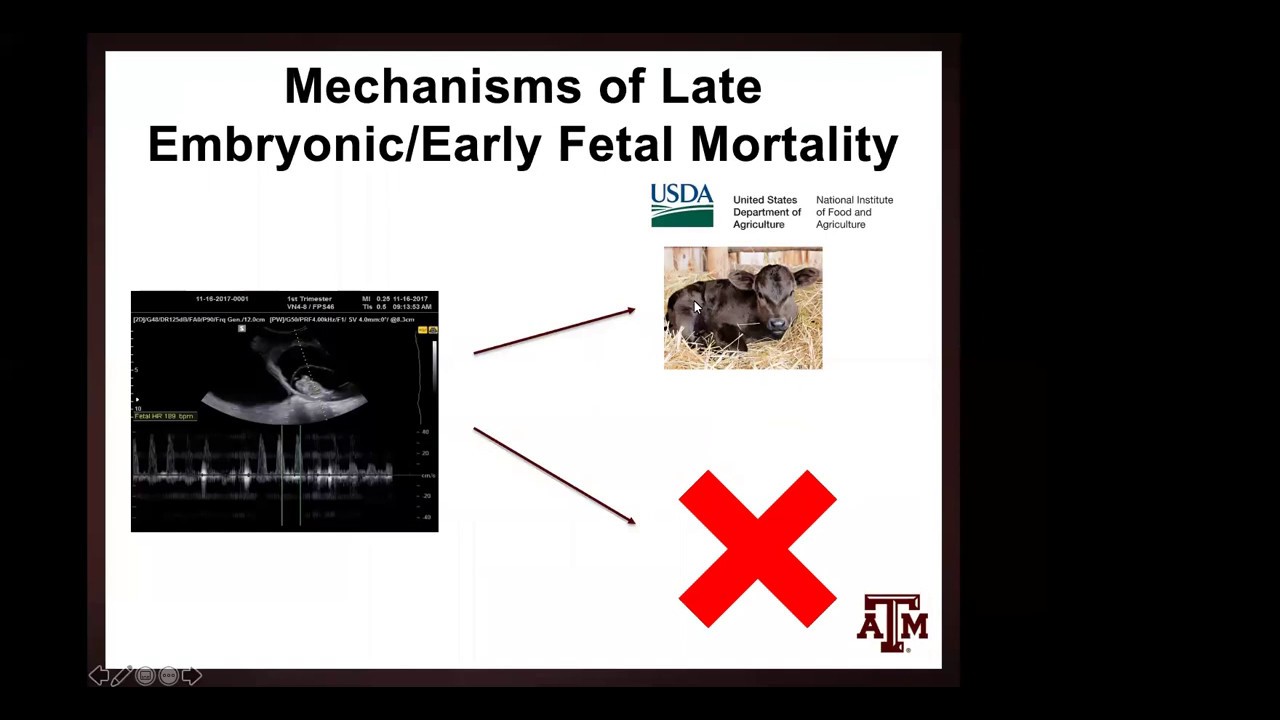
Uniformity does not mean every calf must look like a clone. It means the group sorts cleanly and performs predictably. On a commercial ranch, that predictability often matters more than having one eye-catching standout and ten average mates behind it.
Improve maternal traits without giving up performance
A lot of herds have lived through the swing from chasing performance at all costs to chasing maternal traits at the expense of growth. Neither extreme holds up well over time. IVF works best when it helps balance the equation.
If your cows are weaning strong calves but falling apart on udders or feet by middle age, that is a maternal correction worth making. If they are easy-keeping and fertile but your feeder calves lack payweight, there is room to push the other direction. Because IVF enables intentional mating choices, it gives ranchers a cleaner way to make those adjustments without turning the whole herd upside down at once.
Add carcass merit where the market rewards it
For producers who retain ownership, grid market cattle, or sell to buyers who watch carcass trends closely, genetic improvement in marbling, ribeye, and yield can have a measurable payoff. IVF makes it easier to use specialized sires on selected donors and build those traits faster than a natural service system alone.
Still, carcass work has to remain anchored to ranch function. There is little use creating cattle that grade beautifully if they melt in your environment, need too much feed, or come with fertility trade-offs. The best cattle are profitable at every stage, not just on a carcass report.
Protect structural soundness and longevity
Feet, legs, sheath quality where relevant, udder attachment, and overall structural integrity do not always get the same attention as growth and carcass numbers, but they should. Cows that stay in the herd and bulls that hold up through breeding season save money. Longevity is an economic trait whether or not it appears first in a catalog description.
IVF can accelerate structural problems if donors and sires are not honestly evaluated. A pretty profile and strong genomic data do not excuse weak pasterns or chronic unsoundness. Ranchers who stay strict on structure often build the kind of cow herd that is less flashy in photos and more profitable over ten years.
Let records drive the next breeding decision
Track pregnancies, losses, and calf outcomes by mating
A surprising number of operations can tell you what they spent on semen and synchronization but cannot easily tell you which mating produced the best live calf results. That is where the value of records shows up. If one donor by one sire consistently gives vigorous calves that come easy, gain well, and sort high at weaning, that is useful knowledge. If another cross looks impressive on paper but disappoints in the pasture, that is equally useful.
The point of IVF is not merely to produce embryos. It is to produce better cattle. Records turn a breeding program from hopeful to intentional.
Cull based on reproductive truth, not sentiment
Every ranch has cows with history, and every ranch has cows someone likes more than the ledger says they should. IVF does not remove the need to cull. If anything, it sharpens it. When better genetics are easier to multiply, the cost of carrying unproductive females becomes even clearer.
Open cows, chronic late breeders, poor mothers, bad udders, and repeat health problems should not be protected just because they once had value. Ranchers who use IVF as an excuse to avoid culling usually end up with a more expensive version of the same herd.
Compare IVF, AI, and natural service by objective return
Not every mating belongs in an IVF chute. Some cows are better suited to straightforward artificial insemination cattle protocols. Some commercial females should probably stay in a disciplined natural service system with the right bulls. The question is not which method sounds most advanced. The question is which one earns its keep.
In many herds, the answer is a blend. Elite cows go into bovine IVF, a larger tier of genetically useful females are bred AI, and the rest are covered by fertile, well-selected bulls. This layered approach often produces better economics than trying to make every cow fit the same program.
Work with people who understand both cattle and timing
Choose a veterinary and embryology team with local cattle experience
Success with cattle breeding Madisonville TX, or anywhere in Texas, depends partly on working with professionals who understand local conditions. That includes the practical side of hauling, heat stress, forage cycles, vaccination timing, and the kind of recipient cows common in the area. A good reproductive team does not just know the lab side. They understand how cattle behave on real ranches.
That matters because the best plan on paper still has to survive weather, labor constraints, and ordinary ranch unpredictability. Producers often benefit from asking fewer questions about sales pitch and more questions about scheduling, recipient management, donor suitability, and how the clinic handles setbacks.
Keep the health program tight from donor to recipient to calf
Embryos do not exist in a vacuum. Donor health, recipient vaccination status, biosecurity, parasite control, and calf health planning all affect the final outcome. A rushed or uneven health program can undercut excellent genetics quickly.
This is especially important when cattle move between places. Any time donors, recipients, or calves are managed across different groups, communication has to be clean. Vaccines, mineral programs, pregnancy checks, and calving protocols need to line up. A top-shelf embryo does not make up for sloppy herd health.
Stay patient enough to judge the program over several calf crops
One flush, one aspiration cycle, or one transfer group rarely tells the whole story. Reproductive technologies have variability built into them. Weather changes, donor response changes, and recipient performance changes. The ranchers who use IVF best are patient enough to evaluate trends across multiple breeding seasons, not just one result sheet.
That patience should not be confused with passivity. If conception is poor, calves are inconsistent, or costs are outrunning gains, adjustments need to be made quickly. But the real value of herd genetics work often shows up over several calf crops, when replacement daughters calve, steer mates feed, and the whole cow herd starts to shift in a visible way.
Where IVF fits in a Texas herd today
The practical case for bovine IVF is strongest when a ranch knows exactly what it wants to change. Better replacement females. More uniform feeder calves. Faster spread of elite maternal genetics. Targeted carcass improvement. A tighter calving window. Better use of a standout donor. Those are concrete goals, and IVF can help reach them when the groundwork is solid.
It is not a replacement for stockmanship, and it does not excuse weak culling, poor records, bad nutrition, or casual sire selection. It magnifies what is already there. In a disciplined operation, that is a major advantage. In a disorganized one, it can magnify confusion just as quickly.
For Texas ranchers willing to use it with clear eyes, embryo transfer and IVF offer something valuable: speed with precision. Not speed for its own sake, but speed toward a cow herd that calves better, lasts longer, and produces offspring buyers want. That is the kind of genetic progress that shows up where it counts, in the pasture, on the scale, and in the check at the end of the sale.